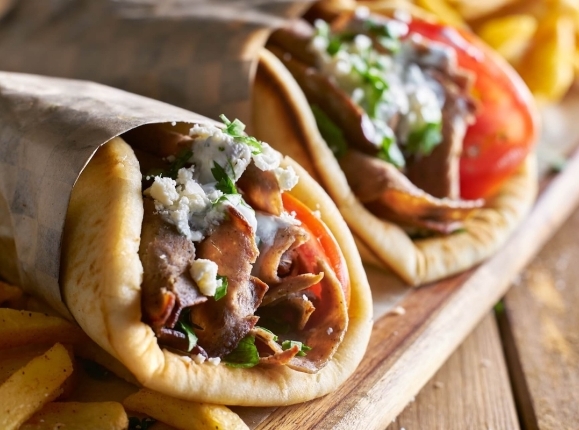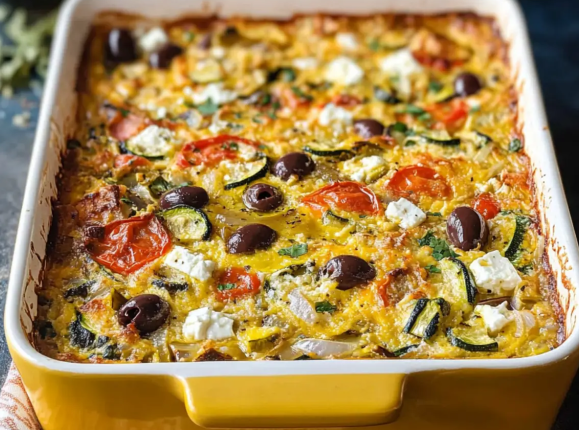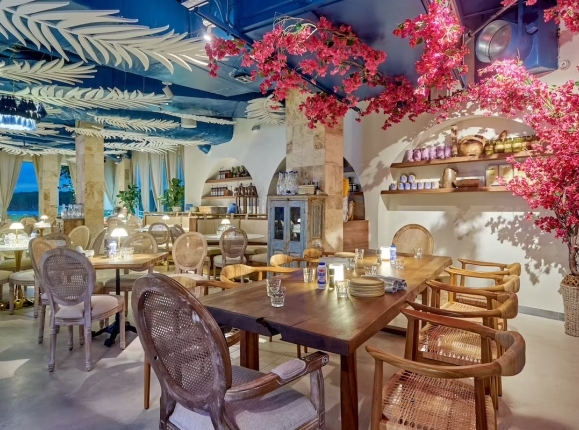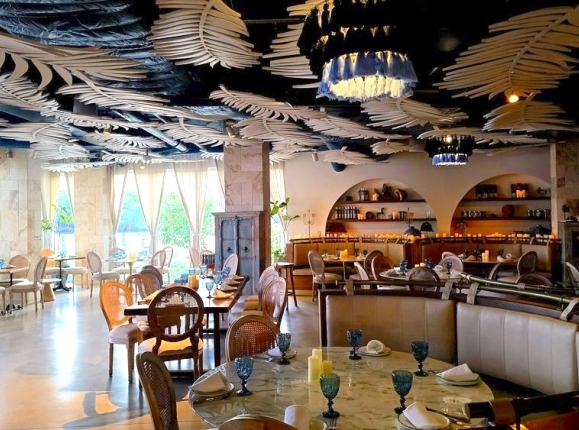
Greek cuisine has a remarkable ability to make simple ingredients taste memorable. A fresh fish needs little more than careful grilling, olive oil, lemon, and herbs. Ripe vegetables can become the centerpiece of the table rather than an obligatory side dish. Even warm pita served with a well-made Mediterranean spread can demonstrate how much flavor can come from ingredients treated with care.
This simplicity is not accidental. It is one of the defining principles behind authentic Greek cuisine.
Instead of hiding ingredients beneath complicated sauces or excessive seasoning, traditional Greek cooking often focuses on three fundamental elements: excellent olive oil, bright citrus, and the transformative power of fire. Add fresh herbs, vegetables, seafood, cheese, and generations of culinary knowledge, and you begin to understand why Greek food can feel rustic and sophisticated at the same time.
For diners exploring Greek cuisine in Florida, these traditions also feel particularly at home in South Florida. The warm climate, coastal lifestyle, fresh seafood, and love of outdoor dining create a natural connection between Miami and the Mediterranean.
At Mykonos Kitchen & Bar in Sunny Isles Beach, that relationship comes together through Greek and Mediterranean flavors served in a waterfront environment — a setting that feels especially appropriate for food inspired by the islands and coastlines of Greece.
To understand Greek flavor, begin with olive oil.
Olive trees have been part of Greek culture for thousands of years, and olive oil remains one of the defining ingredients of the country's cuisine. It isn't simply something used to prevent food from sticking to a pan. It can be a cooking medium, a dressing, a finishing ingredient, and a source of flavor in its own right.
You'll find olive oil throughout a Greek meal.
It brings richness to salads, enhances vegetables, complements grilled fish, works beautifully with herbs and lemon, and gives many Mediterranean dishes their characteristic smoothness and depth.
The important word is balance.
Good Greek cooking doesn't necessarily need to overwhelm ingredients with olive oil. Instead, it uses it to connect flavors. Tomatoes taste sweeter, herbs become more aromatic, and seafood gains richness without losing its delicate character.
For anyone wanting to experience authentic Greek cuisine made with Mediterranean ingredients in Sunny Isles Beach, paying attention to how olive oil is used is an excellent place to start.
If olive oil provides richness, lemon provides contrast.
Greek cuisine makes exceptional use of acidity. Fresh lemon can transform grilled seafood, brighten vegetables, balance richer meats, and bring definition to sauces and marinades.
Consider a piece of beautifully grilled fish.
On its own, it may be delicate and savory. Add olive oil and it gains richness. Add fresh lemon and suddenly the entire dish feels brighter. Neither ingredient needs to overpower the fish; they simply reveal different dimensions of its flavor.
That relationship between fat and acidity is one of the quiet secrets of Mediterranean cooking.
Lemon is especially important in coastal Greek cuisine, where seafood often benefits from clean, uncomplicated preparation. Rather than masking the natural flavor of a fish beneath a heavy sauce, citrus helps emphasize its freshness.
It is a philosophy particularly well suited to Mediterranean seafood dining in Miami and Sunny Isles Beach, where warm weather and waterfront surroundings call for food that tastes vibrant rather than unnecessarily heavy.
Then comes fire.
Grilling is one of the most important techniques in Greek and Mediterranean cooking. It transforms relatively simple ingredients through heat, smoke, caramelization, and texture.
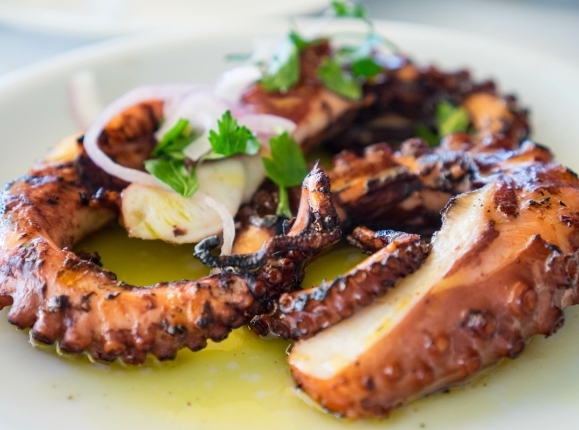
Think about what happens to an octopus on the grill. The exterior develops char and smoky depth while proper preparation preserves tenderness inside.
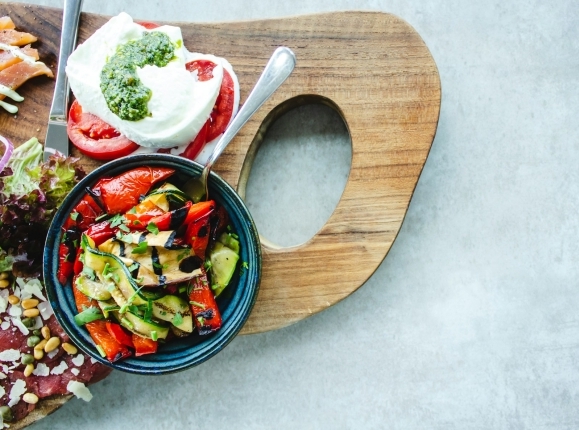
Vegetables change too. Peppers become sweeter. Eggplant develops deeper flavor. Tomatoes intensify. Meat gains a savory crust while herbs and marinades become more aromatic.
And fish may be one of the best demonstrations of all.
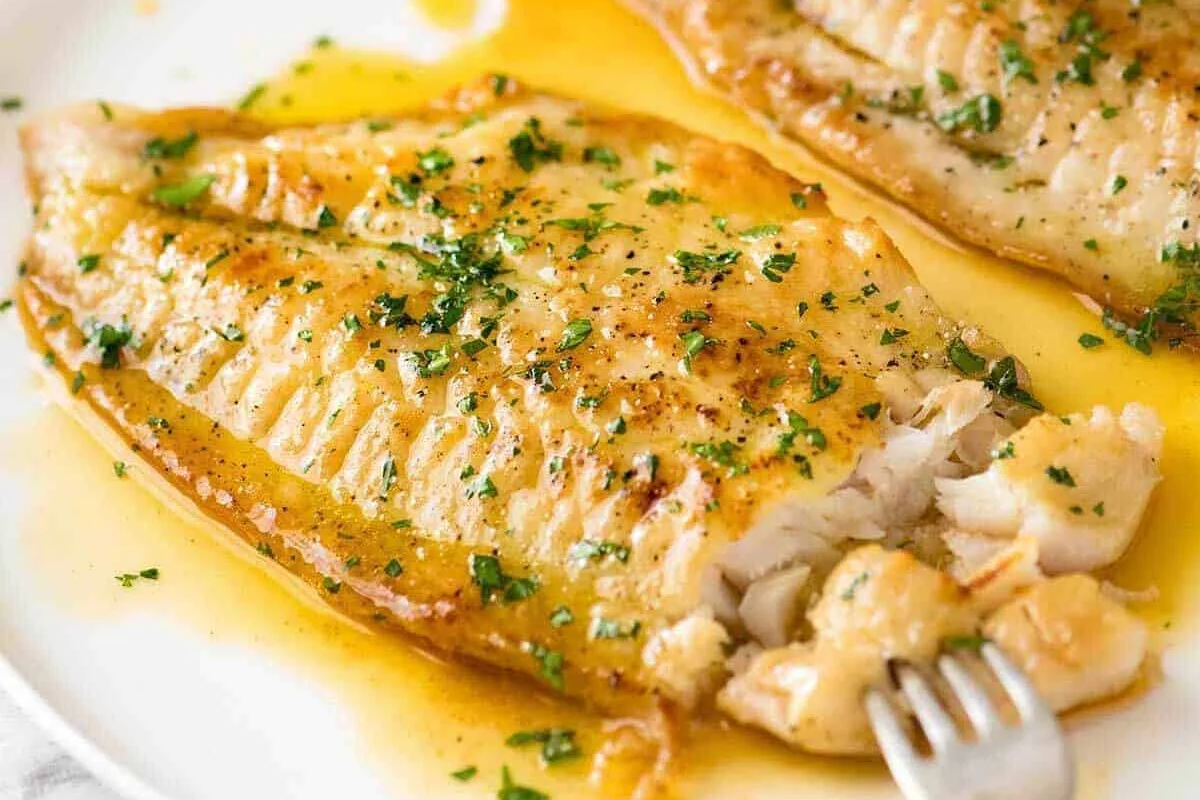
A carefully grilled branzino doesn't need culinary theatrics. The fire provides character; olive oil adds richness; lemon contributes freshness; herbs finish the story.
Four simple elements can produce a dish with remarkable depth.
Greece's geography has always influenced its cuisine. With thousands of islands and an extensive coastline, seafood naturally plays an important role in Greek food culture.
Fish and shellfish are particularly compatible with the Greek approach to cooking because freshness rewards restraint.
Rather than asking, "What can we add to this seafood?" Greek cooking often seems to ask, "What does this seafood actually need?"
Sometimes the answer is surprisingly little.
A grill.
Olive oil.
Lemon.
Herbs.
Salt.
Experience.
For diners searching for fresh Greek seafood and Mediterranean flavors at a waterfront restaurant in Sunny Isles Beach, this philosophy provides a refreshing alternative to preparations dominated by heavy breading or rich sauces.
At Mykonos Kitchen & Bar, seafood fits naturally into the restaurant's waterfront surroundings, connecting Mediterranean culinary inspiration with South Florida's coastal lifestyle.
Branzino beautifully demonstrates the power of simplicity.
Known for its delicate texture and mild flavor, this Mediterranean sea bass responds particularly well to grilling. It doesn't require excessive seasoning because the goal isn't to turn the fish into something else.
The goal is to make it taste unmistakably like excellent fish.
Olive oil, herbs, citrus, and heat can complement the branzino while preserving its character. The grill introduces a subtle smoky element, while lemon provides the freshness that makes you immediately want another bite.
At Mykonos Kitchen & Bar, branzino is an excellent choice for guests who want to discover the relationship between Greek seafood traditions and waterfront dining in Florida.
Enjoying grilled fish beside the water also adds something that can't be measured on an ingredient list: context.
The plate and the surroundings suddenly belong together.
Olive oil, lemon, and fire may form the foundation, but Greek flavor would not be complete without herbs.
Oregano is perhaps the ingredient most immediately associated with Greek food, but Mediterranean cooking also makes use of herbs such as dill, mint, parsley, and thyme.
Herbs create aroma and freshness without the heaviness of elaborate sauces.
They can transform salads, complement cheese, brighten seafood, add character to grilled meats, and create contrast in yogurt-based preparations.
The important principle, again, is restraint.
Greek cuisine often succeeds because it knows when to stop adding things.
When tomatoes are ripe, let them taste like tomatoes. When fish is fresh, let it taste like fish. When olive oil is good, don't hide it.
That confidence in ingredients is part of what makes traditional Greek food and Mediterranean cuisine so distinctive.
A Greek salad is another excellent lesson in this philosophy.
There is nowhere for mediocre ingredients to hide.
Fresh tomatoes, crisp cucumber, onion, olives, feta, herbs, and olive oil have to work together without relying on complicated preparation.
When the ingredients are good, they don't need much intervention.
The sweetness and acidity of the tomatoes contrast with salty feta and olives. Cucumber brings crunch and freshness. Olive oil ties the ingredients together, while herbs add aroma.
This is Greek cooking in miniature: straightforward ingredients, distinct flavors, careful balance.
It is also one reason people looking for fresh Mediterranean food in Sunny Isles Beach are naturally drawn to Greek cuisine. The food feels particularly suited to Florida's warm, coastal environment.
Greek flavor isn't only about individual ingredients. It's also about how food is served.
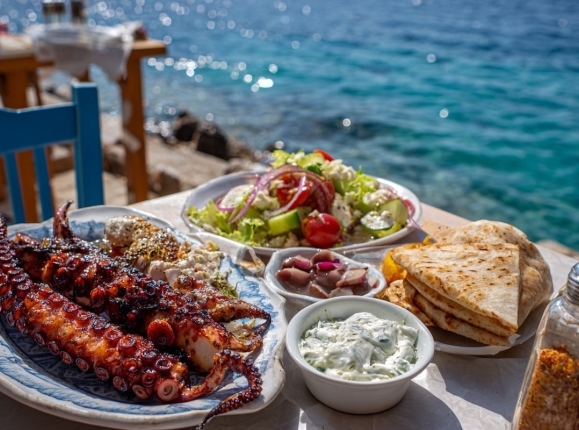
Consider a table with warm pita and several Mediterranean appetizers.
One person tears off a piece of bread. Someone passes a dip. Another guest reaches for salad. A seafood plate arrives and everyone tries it.
Before the main course has even appeared, the meal has become a social experience.
This sharing tradition is an essential part of Mediterranean dining. Food creates interaction, and the table becomes the center of the evening.
For guests who want to share traditional Mediterranean appetizers and Greek dishes at a waterfront restaurant in Miami, ordering several dishes for the center of the table is one of the best ways to experience the cuisine.
Greece and Florida are separated by an ocean, but their dining lifestyles have surprising similarities.
Both are strongly connected to the water. Warm weather encourages outdoor meals. Seafood feels natural. Fresh, bright flavors work particularly well in the climate. And dining often becomes part of a larger social experience rather than simply a functional meal.
That is why Greek cuisine in Florida can feel remarkably at home.
Imagine finishing a day near the water with grilled seafood, fresh vegetables, pita, olive oil, and a chilled drink. The menu may be Mediterranean, but the experience fits perfectly into South Florida.
This connection becomes even stronger in Sunny Isles Beach, where waterfront dining provides a natural stage for Greek-inspired cuisine.
The statement that Greek food is healthy often comes from the ingredients traditionally associated with Greek and Mediterranean dietary patterns.
Vegetables, legumes, seafood, herbs, olive oil, yogurt, and other minimally processed ingredients frequently appear in the cuisine. Grilling is also widely used, allowing ingredients to develop considerable flavor without requiring heavy preparations.
Of course, no cuisine can be reduced to a simple "healthy" or "unhealthy" label, and individual dishes vary considerably.
What Greek cuisine does particularly well is demonstrate that fresh ingredients and satisfying flavor don't need to be opposites.
A meal can include grilled seafood, vegetables, olive oil, salad, pita, cheese, and something sweet while still emphasizing variety and balance.
Modern restaurant cooking sometimes equates sophistication with complexity.
Greek cuisine provides an alternative perspective.
Sophistication can come from knowing exactly how long an ingredient should remain over the fire. It can come from understanding how much lemon a fish needs or when olive oil should be added. It can come from selecting ripe vegetables instead of attempting to compensate for mediocre ones later.
In other words, simplicity requires skill.
There is nowhere to hide.
That is why an expertly grilled piece of seafood can sometimes be more impressive than a dish containing a dozen competing components.
Another secret behind Greek flavor has nothing to do with seasoning.
It is company.
Greek meals traditionally encourage lingering. Several dishes arrive. People share. Conversation continues between bites. Nobody needs to rush toward the final course.
This social quality changes the way food is experienced.
A plate of warm pita is better when everyone is reaching for it. Mezze makes more sense when several people are tasting different combinations. A whole fish becomes an occasion when shared across the table.
For families, couples, and groups searching for authentic Greek food and waterfront Mediterranean dining in Sunny Isles Beach, this communal approach can turn an ordinary restaurant visit into something much more memorable.
Mykonos Kitchen & Bar brings the spirit of Mediterranean dining to Sunny Isles Beach through Greek-inspired flavors, seafood, grilled specialties, shareable dishes, and a waterfront atmosphere.
It is an environment where the fundamental elements of Greek cooking make sense.
Olive oil belongs with fresh vegetables and seafood. Lemon belongs beside grilled fish. Fire gives ingredients their char and personality. Herbs provide freshness. Pita and appetizers encourage the table to share.
And the waterfront provides the final ingredient: atmosphere.
For guests looking to enjoy authentic Greek cuisine at a waterfront Mediterranean restaurant in Sunny Isles Beach, Florida, the experience is about more than choosing a single entrée. Start with dishes for the table, explore the seafood, try something from the grill, and allow yourself time to enjoy the meal.
The greatest lesson Greek cooking can teach may also be the simplest: exceptional flavor doesn't necessarily require more.
Sometimes it requires less.
Use better olive oil instead of a heavier sauce. Add lemon when a dish needs brightness. Let the grill create complexity. Choose fresh herbs. Respect seafood. Allow vegetables to taste like themselves.
Then put everything on the table and share it.
That is the enduring appeal of authentic Greek cuisine. Its flavors can be bold without becoming complicated and memorable without being excessive.
At Mykonos Kitchen & Bar, those Mediterranean principles meet the waterfront lifestyle of Sunny Isles Beach, creating a fitting setting for discovering just how much can happen when olive oil, lemon, fire, and excellent ingredients come together.
Sometimes the simplest secrets produce the flavors you remember longest.
What makes Greek food so memorable? It isn't necessarily an elaborate recipe, an expensive ingredient, or a complicated cooking technique....
Some dinners are better when you don't have to choose between two dishes.Greek dining understands this perfectly.Instead of ordering one...
Your first experience with Greek food doesn't need to begin with knowing how to pronounce every dish on the menu.It...
Lunch in Sunny Isles Beach deserves more than a quick stop between plans.With warm Florida weather, waterfront scenery, and the...
What does the perfect Mediterranean dinner actually need?The answer is refreshingly simple: fresh ingredients, food made for sharing, something delicious...
A memorable date night does not always require an elaborate plan. Sometimes, the right combination of beautiful surroundings, food designed...
Greek cuisine has a remarkable ability to make simple ingredients taste memorable. A fresh fish needs little more than careful...
Walking into a Greek restaurant for the first time can feel like the beginning of a small Mediterranean adventure. The...
Miami and the water are inseparable. From the sparkling expanse of Biscayne Bay to the Intracoastal Waterway and the marinas...
There’s something about Greek cuisine that captures the hearts—and taste buds—of food lovers everywhere. In Sunny Isles, where diverse culinary...
Few culinary traditions in the world are as deeply intertwined with hospitality as Greek cuisine. In Greece, food is more...
There’s a word in Greek that perfectly encapsulates the warmth, generosity, and open-heartedness that define the country’s approach to dining...

Mykonos Kitchen & Bar brings the authentic taste of Greece to Sunny Isles Beach, FL. Our waterfront restaurant offers a vibrant dining experience with a menu crafted from fresh ingredients and traditional recipes. From savory appetizers to signature cocktails, we provide exceptional food quality and warm hospitality. Whether it's a romantic dinner, family brunch, or special event, we create memorable moments for every occasion.
Tue - Fri 5PM-11PM
Sat 12PM-11PM
Sun 12PM-11PM
Closed on Monday
Sat 12PM–3:30PM
Sun 12PM–3:30PM