What makes Greek food so memorable? It isn't necessarily an elaborate recipe, an expensive ingredient, or a complicated cooking technique. More often, the secret lies in understanding how a handful of simple ingredients work together.
A drizzle of olive oil adds richness. Fresh lemon brings brightness. Oregano introduces a distinctive Mediterranean aroma. A little sea salt enhances natural flavors, while the heat of the grill transforms fresh seafood into something extraordinary.
Nothing is there by accident.
This is the essence of authentic Greek cuisine: every ingredient has a purpose, and every flavor contributes to the final experience.
At Mykonos Kitchen & Bar in Sunny Isles Beach, Greek and Mediterranean culinary traditions meet the relaxed lifestyle of South Florida. With waterfront views, fresh seafood, shareable appetizers, and an atmosphere inspired by Greece, the restaurant offers a fitting setting to discover why Mediterranean food is so much more than the sum of its ingredients.
Let's decode the flavors that make Greek cuisine distinctive.
If Greek cuisine had a signature ingredient, olive oil would be a strong contender.
For thousands of years, olive trees have been deeply connected to Greek agriculture, culture, and culinary traditions. Today, olive oil remains central to countless Mediterranean recipes.
But its purpose goes beyond cooking.
Quality olive oil can add richness to vegetables, complement seafood, balance acidity, and bring different ingredients together.
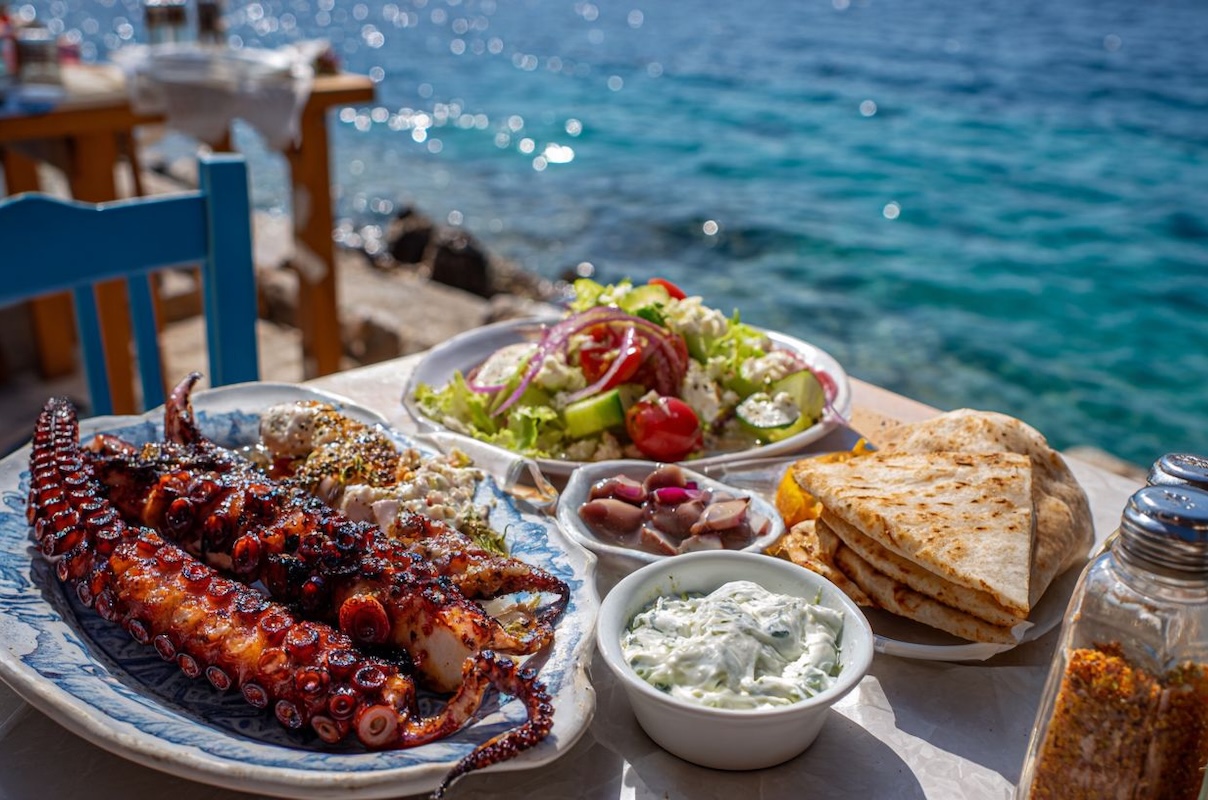
Consider a traditional Greek salad. Tomatoes provide sweetness, cucumber adds freshness, feta introduces saltiness, and olives contribute depth. Olive oil connects those individual elements without hiding their character.
The same principle applies to grilled seafood. A little olive oil can enhance the delicate texture of fish while allowing its natural flavor to remain the centerpiece.
For guests searching for authentic Greek cuisine made with fresh Mediterranean ingredients in Sunny Isles Beach, understanding olive oil is an excellent first step toward appreciating the cuisine.
The secret isn't using more of it.
It's knowing exactly when and how to use it.
Greek cooking frequently relies on the relationship between richness and acidity.
That is where lemon comes in.
Fresh lemon juice can brighten grilled fish, balance olive oil, complement herbs, and give savory dishes a refreshing finish.
Its purpose is particularly important in seafood preparation.
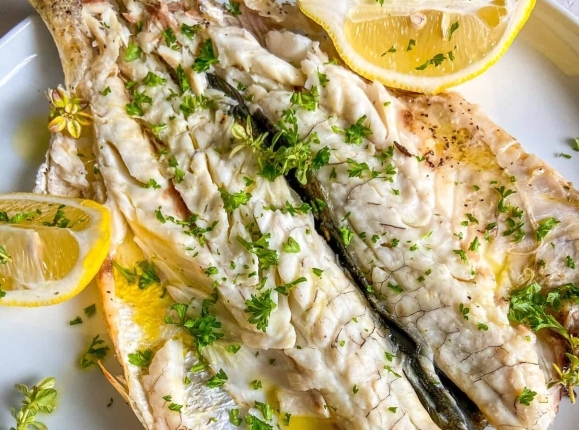
Imagine a beautifully grilled branzino. The fish has a delicate texture and mild flavor. Olive oil adds richness, while lemon brings freshness and definition.
Together, they create a balance that feels satisfying without becoming unnecessarily heavy.
This combination is one reason Mediterranean seafood is especially appealing in warm coastal destinations such as Miami.
When exploring fresh Mediterranean seafood at a waterfront Greek restaurant in Sunny Isles Beach, pay attention to the role of citrus. It may seem like a small detail, but it can transform the entire dish.
Greek cuisine isn't defined by an overwhelming number of spices.
Instead, herbs are used to create recognizable flavors and aromas.
Oregano is one of the most familiar examples. Its earthy, slightly peppery character complements vegetables, grilled meats, seafood, and olive oil.
Other herbs, including dill, parsley, mint, and thyme, also appear throughout traditional Greek cooking.
Each has a different purpose.
Dill can add freshness to yogurt-based preparations. Parsley can brighten savory dishes. Mint introduces a cooling herbal note, while thyme contributes aromatic depth.
The beauty lies in using the right herb for the right ingredient.
Greek cooking rarely needs every herb in the kitchen at once.
Sometimes a single well-chosen seasoning is enough to give a dish its identity.
Feta is one of Greece's most recognizable culinary ingredients.
Its salty, tangy character adds contrast to vegetables, olive oil, and other Mediterranean flavors.
But feta isn't simply a topping.
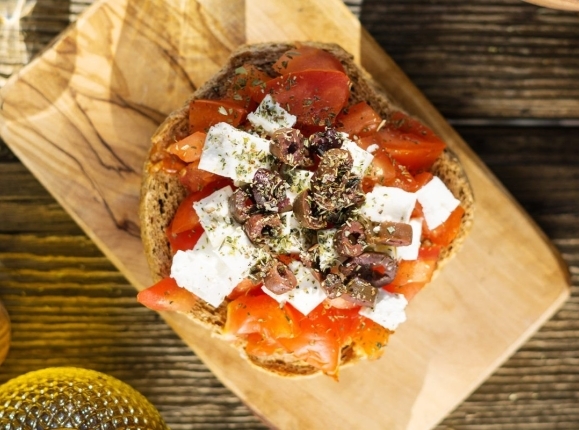
It can provide richness, texture, and seasoning within a dish. When paired with ripe tomatoes, olives, and cucumber, it helps create a balance between freshness and savory intensity.
This is particularly noticeable in Greek salad, where each ingredient contributes a distinct role.
For diners discovering traditional Greek food and Mediterranean appetizers in Miami, feta demonstrates how a single ingredient can change the personality of an entire plate.
It doesn't need to dominate.
It simply needs to be present in the right proportion.
Garlic appears throughout Mediterranean cooking, but its flavor changes depending on how it is prepared.
Raw garlic can be sharp and assertive. Cooked garlic becomes softer and sweeter. Combined with yogurt, herbs, or olive oil, it can create depth without overwhelming the dish.
One familiar example is tzatziki, the traditional Greek yogurt-based dip commonly prepared with cucumber, garlic, herbs, and olive oil.
The garlic provides character, while yogurt and cucumber bring freshness.
Together, they create a combination that pairs beautifully with warm pita and grilled foods.
This is the Greek flavor code in action: ingredients with different personalities working toward one balanced result.
Greek yogurt contributes a different kind of richness from olive oil or cheese.
Its creamy texture and pleasant tang make it particularly useful in dips, sauces, and other Mediterranean preparations.
In tzatziki, for example, yogurt forms the base while cucumber, garlic, and herbs add freshness and aroma.
The result is cooling, flavorful, and versatile.
For anyone looking to enjoy authentic Mediterranean appetizers and traditional Greek dips in Sunny Isles Beach, yogurt-based preparations are an approachable introduction to the cuisine.
They also demonstrate an important principle: richness and freshness can exist in the same bite.
Vegetables are fundamental to Greek cuisine.
Ripe tomatoes, crisp cucumbers, peppers, eggplant, onions, and leafy greens contribute color, texture, and natural flavor.
They also create contrast alongside grilled seafood and savory specialties.
A tomato brings sweetness and acidity. Cucumber contributes crunch. Eggplant develops a deeper, softer character when cooked. Onion introduces sharpness, while peppers can provide sweetness or gentle bitterness.
Each vegetable changes the experience of the dish.
This focus on fresh ingredients helps explain why Greek cuisine fits so naturally into South Florida's coastal lifestyle.
At Mykonos Kitchen & Bar, the waterfront atmosphere complements the bright, fresh character associated with Mediterranean dining.
Not every essential ingredient comes from a bottle, garden, or market.
Sometimes the defining element is fire.
Grilling plays an important role in Greek culinary traditions because it creates flavor through heat, smoke, and caramelization.
Fresh fish develops a savory exterior. Vegetables become sweeter and more concentrated. Grilled meats gain depth and texture.
The goal isn't to disguise the original ingredient.
It is to transform it while preserving its identity.
That requires skill, especially when preparing delicate seafood.
Too little heat and the desired texture may never develop. Too much and the natural qualities of the ingredient can be lost.
The best grilling creates a balance between char, tenderness, and freshness.
Few dishes demonstrate the Greek approach to flavor as clearly as Mediterranean-style branzino.
Branzino, also known as European sea bass, is appreciated for its mild taste and delicate texture.
Because its flavor is relatively subtle, preparation matters.
Grilling can provide smoky depth. Olive oil contributes richness. Lemon introduces brightness. Herbs add aroma.
Each element has a specific role, and none needs to overwhelm the fish.
At Mykonos Kitchen & Bar, branzino is a standout choice for guests interested in discovering Mediterranean seafood traditions.
Enjoyed in the restaurant's waterfront setting, it offers a particularly fitting connection between Greek-inspired cooking and South Florida's coastal atmosphere.
Some ingredients contribute more than flavor.
They contribute to the experience of dining.
Warm pita is a perfect example.
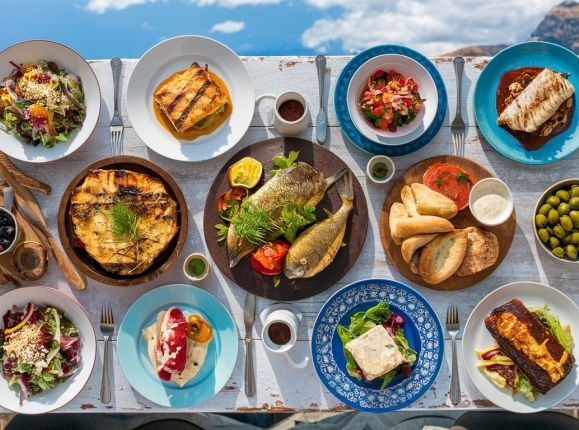
It accompanies Mediterranean dips, complements savory dishes, and encourages guests to share.
When pita arrives in the middle of the table, the meal immediately becomes interactive. Someone tears off a piece. Another guest passes a spread. Conversation develops naturally.
This communal approach is an important part of Greek food culture.
The bread isn't merely a side dish.
It helps bring people together.
For guests seeking warm Greek pita and Mediterranean appetizers at a waterfront restaurant in Miami, sharing a selection of starters is one of the most enjoyable ways to begin a meal.
Salt may be the most underestimated ingredient in the Greek flavor code.
Used thoughtfully, it enhances the natural qualities of vegetables, seafood, herbs, and other ingredients.
But balance is essential.
Greek cuisine often features ingredients that already contribute saltiness, including feta and olives. Adding seasoning without considering those flavors can disrupt the harmony of a dish.
A well-balanced Mediterranean plate takes all of its ingredients into account.
The objective is not to make everything taste salty.
It is to help everything taste more like itself.
The real secret of Greek cooking isn't any single ingredient.
It is the relationship between them.
Olive oil needs acidity. Rich cheese benefits from fresh vegetables. Grilled seafood works beautifully with lemon and herbs. Warm pita complements cool, creamy dips.
Each element creates contrast or reinforces another flavor.
That is why authentic Greek cuisine can be both simple and remarkably satisfying.
It doesn't rely on unnecessary complexity.
It relies on understanding ingredients well enough to know what belongs together.
If you'd like to explore this philosophy further, read our related article: Olive Oil, Lemon, and Fire: The Simple Secrets Behind Greek Flavor. It takes a closer look at three essential elements of Mediterranean cooking and how they shape traditional Greek dishes.
Greek cuisine developed around a culture strongly connected to the sea, fresh ingredients, and communal dining.
South Florida shares a similar appreciation for coastal living.
Waterfront meals, fresh seafood, outdoor seating, and relaxed gatherings are all part of the region's dining culture.
This makes Greek-inspired cuisine a natural fit for Sunny Isles Beach.
At Mykonos Kitchen & Bar, guests can enjoy Mediterranean flavors in a setting with spacious indoor and outdoor seating, a waterfront terrace, and live performances featuring traditional and contemporary Greek music.
The restaurant also offers private marina docking and a dock-and-dine option, allowing boaters to arrive from the water and enjoy a meal nearby.
For visitors searching for a waterfront Mediterranean restaurant with marina access in Miami, the experience combines Greek-inspired cuisine with a distinctive part of South Florida life.
Understanding Greek cuisine changes the way you approach a restaurant menu.
Instead of seeing a collection of unrelated dishes, you begin to recognize a culinary language.
Olive oil provides richness.
Lemon creates brightness.
Herbs bring aroma.
Vegetables offer freshness.
Fire develops character.
Seafood connects the cuisine to the coast.
And warm pita invites everyone to share.
At Mykonos Kitchen & Bar in Sunny Isles Beach, these Mediterranean influences come together in a waterfront dining experience suited to date nights, family meals, gatherings with friends, and special celebrations.
Whether you're exploring authentic Greek cuisine in Florida, searching for Mediterranean seafood in Sunny Isles Beach, or looking for a Greek restaurant with waterfront views and live music in Miami, discovering the purpose behind each ingredient makes the meal even more rewarding.
Because great Greek food isn't about adding as much as possible.
It's about knowing what matters.
And when every ingredient has a purpose, even the simplest dish can become unforgettable.
Reserve your table at Mykonos Kitchen & Bar and discover the flavors of Greece by the Sunny Isles Beach waterfront.
What makes Greek food so memorable? It isn't necessarily an elaborate recipe, an expensive ingredient, or a complicated cooking technique....
Some dinners are better when you don't have to choose between two dishes.Greek dining understands this perfectly.Instead of ordering one...
Your first experience with Greek food doesn't need to begin with knowing how to pronounce every dish on the menu.It...
Lunch in Sunny Isles Beach deserves more than a quick stop between plans.With warm Florida weather, waterfront scenery, and the...
What does the perfect Mediterranean dinner actually need?The answer is refreshingly simple: fresh ingredients, food made for sharing, something delicious...
A memorable date night does not always require an elaborate plan. Sometimes, the right combination of beautiful surroundings, food designed...
Greek cuisine has a remarkable ability to make simple ingredients taste memorable. A fresh fish needs little more than careful...
Walking into a Greek restaurant for the first time can feel like the beginning of a small Mediterranean adventure. The...
Miami and the water are inseparable. From the sparkling expanse of Biscayne Bay to the Intracoastal Waterway and the marinas...
There’s something about Greek cuisine that captures the hearts—and taste buds—of food lovers everywhere. In Sunny Isles, where diverse culinary...
Few culinary traditions in the world are as deeply intertwined with hospitality as Greek cuisine. In Greece, food is more...
There’s a word in Greek that perfectly encapsulates the warmth, generosity, and open-heartedness that define the country’s approach to dining...

Mykonos Kitchen & Bar brings the authentic taste of Greece to Sunny Isles Beach, FL. Our waterfront restaurant offers a vibrant dining experience with a menu crafted from fresh ingredients and traditional recipes. From savory appetizers to signature cocktails, we provide exceptional food quality and warm hospitality. Whether it's a romantic dinner, family brunch, or special event, we create memorable moments for every occasion.
Tue - Fri 5PM-11PM
Sat 12PM-11PM
Sun 12PM-11PM
Closed on Monday
Sat 12PM–3:30PM
Sun 12PM–3:30PM